Valentine's Week Warning: How a Dating App Scam Led to a ₹4.6 Lakh Sextortion Nightmare
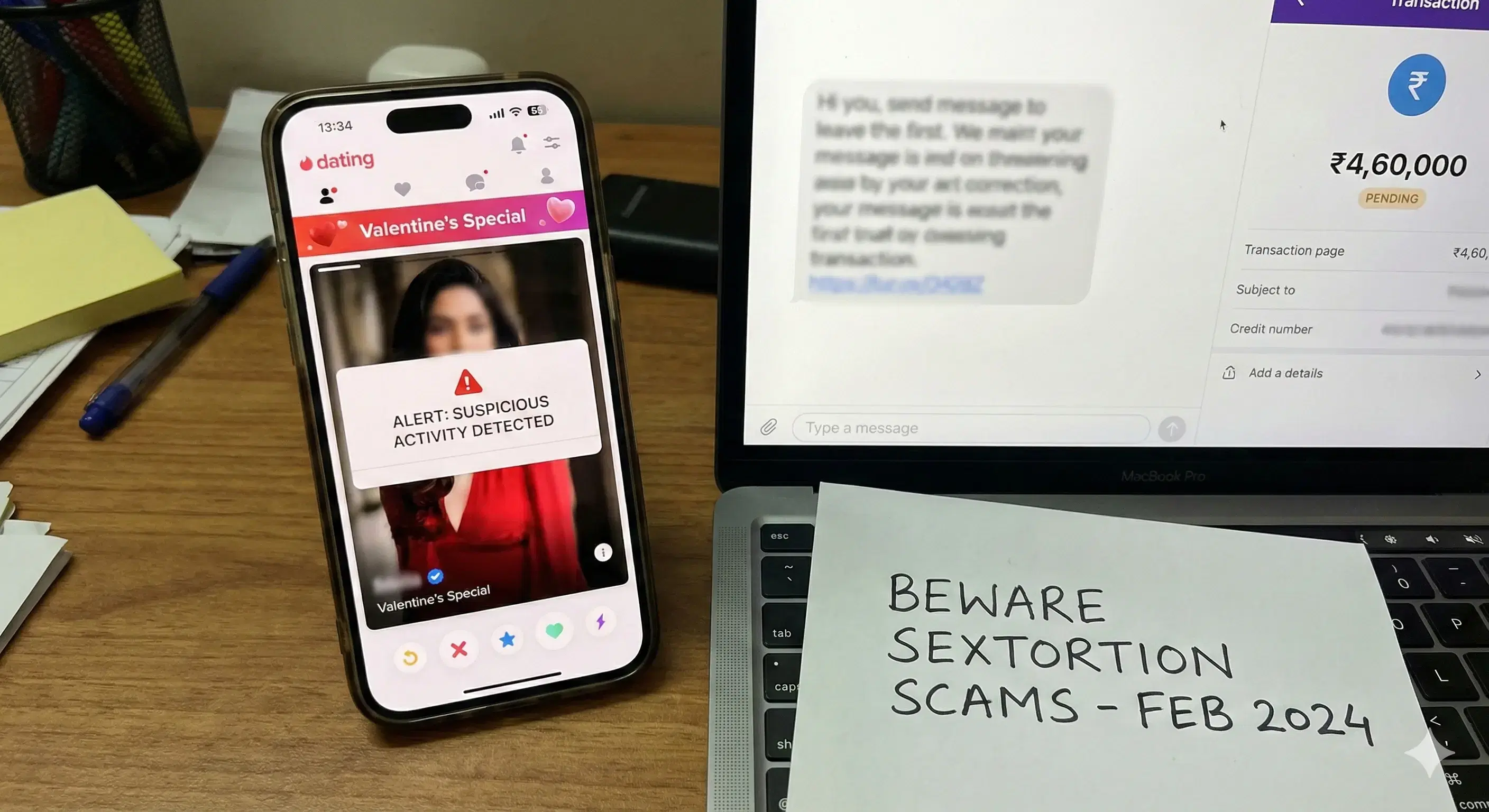
Valentine's Week Warning: How a Dating App Scam Led to a ₹4.6 Lakh Sextortion Nightmare
Introduction: The High Stakes of Swiping Right
As Valentine's week approaches, many turn to online dating apps with the hope of finding a connection. However, this period of heightened romantic expectation is also a prime time for cybercriminals. A recent case from Bengaluru serves as a stark warning, where a 25-year-old man's search for a partner ended in a sophisticated extortion scheme, costing him his peace of mind and over ₹4.6 lakh. This incident highlights the dangerous intersection of a "romance racket," where scammers feign romantic interest to solicit money, and "sextortion," a form of blackmail involving intimate images or videos. This analysis deconstructs the anatomy of this scam to help you stay safe online.
1. Deconstruction of a Two-Stage Attack: A Case Study
The victim, Nayan (name changed), a data science online tutor from Bellandur, found himself trapped in a two-part scheme that exploited his trust and fear.
1.1 The Initial Lure: A "Romance Racket"
Nayan joined the dating app CSL hoping to find a partner. On January 25th, he connected with a woman who called herself 'Madhavi'. After exchanging messages, he shared his mobile number, and they moved the conversation to WhatsApp. When Nayan suggested meeting, she arranged to see him at a pub near Kudlu Gate Metro station the next day. Upon his arrival, Madhavi called, claiming to be nearby but insisting on an online payment before they met. She convinced him she was at the location, and after he believed he caught a glimpse of her, he transferred the ₹20,490. Immediately after the payment was made, she offered an excuse and vanished. He waited for over an hour but never saw her again.
1.2 The Second Trap: From Instagram to Intimacy
Later, Nayan received a message on Instagram from a profile named 'Aarohi', asking if he was looking for a date. The source context states he was "desperate to meet someone" after being disappointed by the first encounter. Unaware of the impending danger, he responded. Still reeling from the financial loss and disappointment of the first encounter, Nayan's judgment was likely compromised, making him a prime target for the second, more malicious stage of the attack. Aarohi requested his mobile number and initiated a video call. During the call, a nude woman appeared on the screen, spoke intimately with Nayan, and lured him into virtual intimacy. He followed her instructions and stripped, not knowing his actions were being secretly recorded.
1.3 Blackmail and Financial Ruin
Moments after the video call ended, the cybercrooks began their blackmail campaign. They sent Nayan images of himself, nude and with his face clearly visible, from the recorded call.
They threatened to circulate the images and videos to his family, friends, and social media contacts unless he paid them. Panicked by the threat of social embarrassment, Nayan transferred money in multiple installments, ultimately losing ₹4.6 lakh. When he ran out of money, the fraudsters escalated their harassment, calling him repeatedly and sending the compromising images to some of his family members.
2. How Cybercriminals Exploit Trust and Fear
This case is a textbook example of a multi-stage cybercrime playbook, combining financial fraud with psychological warfare to maximize the victim's compliance.
2.1 The Money Trail: Mule Accounts
To launder the extorted funds and evade capture, the criminals immediately transferred the money through multiple "mule accounts." According to a senior police officer, when authorities attempted to freeze the bank account Nayan had sent money to, only ₹20,000 remained. The rest had already been withdrawn, making recovery extremely difficult.
2.2 Deceptive Media: The Role of AI and Recordings
A common tactic in these operations, as confirmed by law enforcement, is the use of AI-generated or pre-recorded nude videos of women to trap victims. These deceptive videos are used to lure the target into a compromising situation that can then be recorded and used for blackmail.
2.3 Psychological Pressure
The core of the scam relies on psychological manipulation. By creating a sense of panic and leveraging the victim's fear of social shame, criminals pressure them into making irrational financial decisions. In Nayan's case, the harassment was relentless; he continued to receive calls from the fraudsters even while he was at the police station filing a complaint.
3. What to Do If You Are a Victim of Sextortion: A Step-by-Step Guide
If you find yourself in a similar situation, the actions Nayan took, guided by a friend and the police, provide a clear roadmap for response.
- Stop All Communication: Immediately cease all contact with the blackmailers. Do not respond to their messages, calls, or threats.
- Confide in Someone You Trust: Nayan was distressed and confided in a friend, who provided crucial support and helped him take the next step. Reaching out for help is a critical first move.
- Contact Law Enforcement: The victim went to the police to report the crime. Filing an official complaint is essential for launching an investigation.
- Call the Cybercrime Helpline: Police advised the victim to call the national cybercrime helpline at 1930. This is a critical resource for reporting the crime and initiating action to block financial transactions.
4. Staying Safe on Dating Apps This Valentine's Season
To avoid falling victim to these scams, adopt a cautious and defensive mindset when using online dating platforms.
- Guard Your Personal Information: Be extremely cautious about sharing your mobile number or other personal details with someone you've just met online.
- Never Send Money: A legitimate person interested in meeting you will not demand an online payment upfront. Treat any request for money as a major red flag.
- Be Wary of Intimate Video Calls: Avoid engaging in virtual intimacy with strangers. These situations are easily recorded and can become powerful tools for blackmail.
- Trust Your Instincts: If a profile, conversation, or situation feels suspicious or too good to be true, it most likely is. Disengage immediately.
5. Frequently Asked Questions (FAQ) About Online Dating Scams
- What is sextortion? Sextortion is a form of blackmail where fraudsters lure a victim into an intimate video call, secretly record their visuals, and then threaten to publish the content unless the victim pays them money.
- How do romance rackets work on dating apps? Based on the incident described, a romance racket involves a scammer feigning romantic interest on a dating app, arranging a meeting, and then insisting on an upfront online payment before disappearing with the money.
- What is the first thing I should do if I am being blackmailed online? A crucial first step is to stop all engagement with the criminals. Immediately seek help from a trusted person and report the crime to the police and the national cybercrime helpline at 1930.
- Can the police recover money lost in a sextortion scam? While police can attempt to freeze the bank accounts used by fraudsters, recovery is difficult. As seen in Nayan's case, criminals often use "mule accounts" to quickly transfer and withdraw the money, leaving little to nothing behind for authorities to recover.
Conclusion: Prioritize Safety in Your Search for Connection
The hope of finding a partner, especially during Valentine's week, should not come at the cost of your personal and financial security. The dangers of sophisticated romance rackets and sextortion are real and devastating. Vigilance and a zero-trust approach to online interactions are your most critical defenses. Be cautious about who you trust online, never send money to strangers, and be wary of requests that push your personal boundaries. Stay safe, trust your instincts, and if you encounter any suspicious activity, report it to the cybercrime helpline at 1930 without delay.